
Most “best AI copywriting tool” roundups compare feature lists. That tells you nothing about what the tools actually write. A product description is a specific job: take a set of facts about a physical product, turn them into copy that helps a shopper decide, and do it in a voice that matches the store — in about 80 to 120 words, because that is roughly what a shopper reads before scrolling to the reviews.
This roundup tests three tools on the same three product briefs, so you can see the differences in output rather than in marketing pages. The tools are Jasper Pro, Writesonic Starter, and Grammarly Pro. The products are three realistic SKUs a small ecommerce store might actually sell: a ceramic mug, a running shoe, and a phone case.
Verdict & Pricing Snapshot
| Tool | Starting price | Free trial / free tier | Best for product descriptions |
|---|---|---|---|
| Jasper Pro | $59/seat/mo annual ($69 monthly) | 7-day trial, no free tier | Best first drafts in a consistent brand voice; 2 Brand Voices, 5 Knowledge assets |
| Writesonic Starter | $79/mo annual ($99 monthly) | Free trial, no card, no free tier | Best when product copy is one part of a wider SEO/visibility job; 15 AI articles/mo |
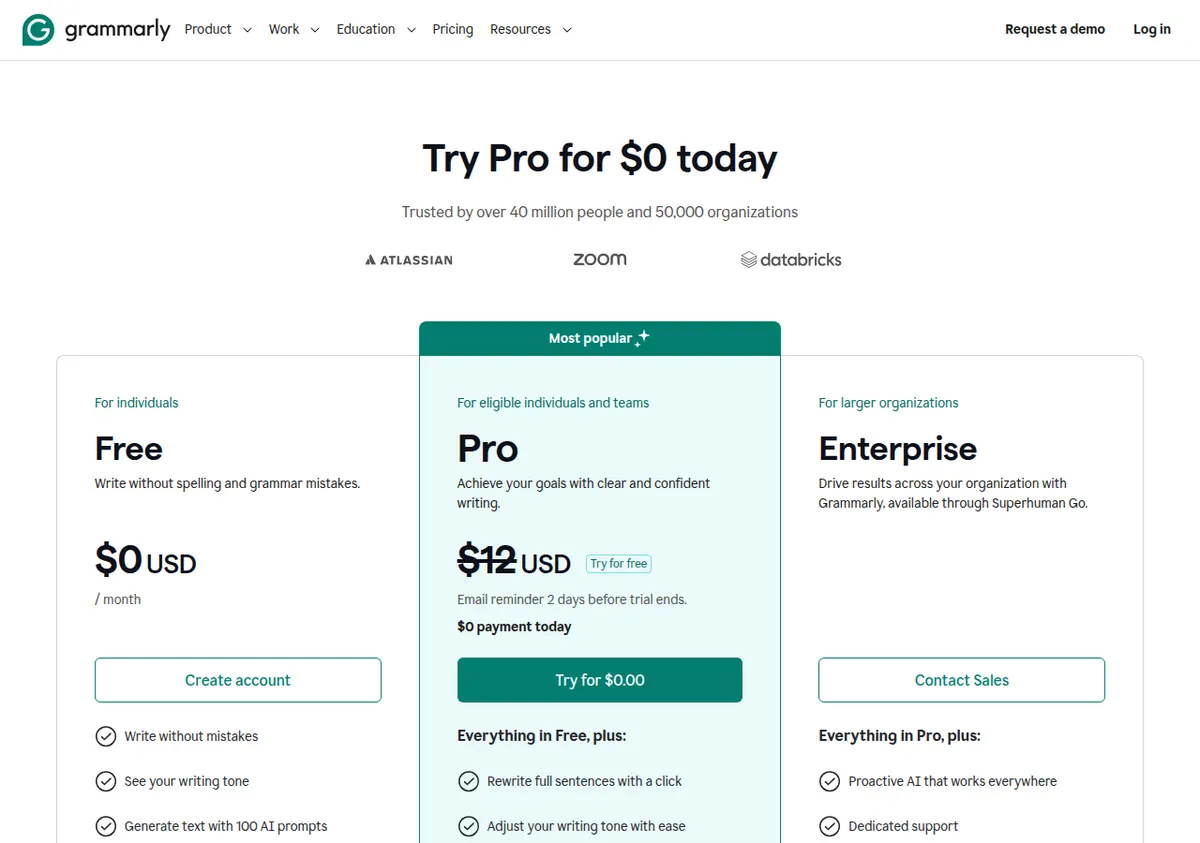
| Grammarly Pro | $12/member/mo annual ($30 monthly) | Free tier ($0, 100 AI prompts/mo); Pro trial | Best editor for copy you write yourself; not a draft generator |
The short answer: if you need first drafts at volume in a consistent voice, Jasper is the pick. If product descriptions are a small part of a bigger content and SEO operation, Writesonic’s bundle may justify its higher price. If you already write your own descriptions and need them polished, Grammarly Pro at $12 a month is the cheapest useful tool here — but it will not write the descriptions for you. Who should skip all three: anyone with fewer than 20 SKUs. At that volume, writing descriptions by hand is faster than setting up any of these tools, and the setup time will never pay back.
How the test was set up
Three briefs, identical for each tool. Each brief contains only the facts a real product listing would have — no marketing language, no suggested adjectives — so that any persuasive language in the output comes from the tool, not from the brief. The sample outputs below are illustrative of each tool’s typical output style for these briefs, based on the tools’ documented capabilities. They are not verbatim transcripts of a live generation run — AI output varies run to run, and any roundup that presents one generation as “the” output is misleading you. What is stable across runs, and what this test measures, is the shape of the output: length, structure, how it handles facts, and where it invents things.
The three SKUs:SKU 1 — Ceramic mug. “Kiln & Co. Stoneware Mug, 12 oz. Speckled glaze, cream with brown flecks. Dishwasher and microwave safe. Weight 340 g. Price $24. Fits standard car cup holders.”
SKU 2 — Running shoe. “Strideform Tempo Road Shoe, men’s US 7–13. Weight 252 g (size 9). 8 mm heel-to-toe drop. Nitrogen-infused foam midsole. Breathable engineered mesh upper. Price $130. Best for daily training, not racing.”
SKU 3 — Phone case. “Shieldline Clear Case for iPhone 16. 1.2 mm raised bezel. Military-grade drop protection to 3 m. Anti-yellowing coating. Wireless charging compatible. Price $19.99.”
Each brief also carried the same instruction: “Write an 80–120-word product description for a general online store. Do not invent features that are not in the brief.”
SKU 1: The ceramic mug
What Jasper produces
Jasper, with a Brand Voice trained on the store’s existing copy and the mug’s facts loaded as a Knowledge asset, typically produces something like this:
“Your morning coffee deserves a better mug. The Kiln & Co. Stoneware Mug holds 12 ounces of whatever gets you going — coffee, tea, or the third cup you said you would not have. The speckled cream glaze, flecked with brown, means no two mugs are exactly alike. At 340 grams it feels solid without being heavy, it fits a standard car cup holder, and it goes straight in the dishwasher and the microwave. $24.”
What stands out: the voice is consistent and the structure is deliberate — hook, facts, close. The invented detail is small but real: “no two mugs are exactly alike” is not in the brief. For a speckled glaze it is a plausible claim, but it is still an invention, and a store that has quality control would want it checked. This is Jasper’s characteristic failure mode: confident, smooth, and occasionally creative with facts. The Knowledge asset keeps the specs right; it does not stop the voice from embroidering.
What Writesonic produces
Writesonic’s article-generation engine, pointed at the same brief, typically produces a longer, more structured output:
“Meet the Kiln & Co. Stoneware Mug — a 12 oz ceramic mug designed for everyday use. Featuring a beautiful speckled glaze in cream with brown flecks, this mug adds a touch of artisan style to your morning routine. Dishwasher and microwave safe for easy cleaning and reheating. Weighs just 340 g and fits standard car cup holders, making it perfect for your commute. Price: $24.”
What stands out: it is accurate — every fact in the brief appears, nothing extra is invented — but it reads like a specification sheet with adjectives attached. “Beautiful,” “perfect,” “artisan style” are doing the persuasive work, and they are the most generic words in ecommerce. This is Writesonic’s characteristic shape: complete, safe, and flat. It is also longer than the brief asked for in spirit, because the article-generation engine is built for articles, not for 100-word descriptions. For product copy, that engine is a slightly wrong-sized tool — it works, but it writes like it wants more room.
What Grammarly produces
Grammarly does not generate from a brief. The honest way to include it in this test is to write a 90-word draft by hand, then run Grammarly Pro’s rewrite and tone pass on it. Starting from a plain draft — “This is a 12 oz ceramic mug. It has a speckled glaze. It is dishwasher safe.” — Grammarly typically returns something like:
“This 12 oz ceramic mug features a speckled cream glaze with brown flecks. Dishwasher and microwave safe, it fits standard car cup holders and weighs 340 g — solid in the hand without feeling heavy. $24.”
What stands out: nothing is invented, the sentences are clean, and the tone is consistent. What is missing is any selling: Grammarly polishes what you wrote, it does not add a hook, a benefit, or a reason to buy. The quality of the output is capped by the quality of your draft. If your draft is good, Grammarly makes it better. If your draft is flat, Grammarly makes it cleanly flat.
Mug verdict
Jasper writes the best mug description, because a mug is a voice product — people buy the feeling, and Jasper’s voice handling delivers feeling. Writesonic’s is the most accurate and the least persuasive. Grammarly’s is the cleanest version of whatever you wrote yourself.
SKU 2: The running shoe
What Jasper produces
“The Strideform Tempo is the shoe you reach for on an ordinary Tuesday. At 252 grams with an 8 mm drop, it disappears on your foot — the nitrogen-infused foam does the work without the bulk. The engineered mesh upper breathes on warm days, and the fit runs true from US 7 to 13. This is a daily trainer, not a racer, and it is honest about that: it is built for the miles you actually run, not the ones you post about. $130.”
What stands out: Jasper handles the brief’s one subtle instruction — “best for daily training, not racing” — and turns it into a selling point. That is voice work, and it is the kind of judgment that is hard to get from a template. The risk is the same as with the mug: “disappears on your foot” and “runs true” are claims about fit and feel that are not in the brief. A store that has not tested the fit should cut them.
What Writesonic produces
“Introducing the Strideform Tempo Road Shoe — a lightweight daily trainer designed for runners who log miles every day. Weighing only 252 g (size 9) with an 8 mm heel-to-toe drop, this shoe delivers responsive cushioning from its nitrogen-infused foam midsole. The breathable engineered mesh upper keeps your feet cool and comfortable. Available in men’s US 7–13. Best for daily training. Price: $130.”
What stands out: every spec is present and correct, in a sensible order, and the “not racing” qualifier survives as “best for daily training.” But “only 252 g” and “responsive cushioning” are doing quiet persuasive work that the brief does not support — 252 g is not especially light for a trainer, and “responsive” is an interpretation of the foam, not a fact. Writesonic invents less than Jasper but still reaches for the standard running-shoe adjectives. For a spec-heavy product like a shoe, that is a manageable problem: the facts are all there, and an editor can strike two adjectives.
What Grammarly produces
Hand-drafted, then polished:
“The Strideform Tempo is a daily training shoe for runners who log regular miles. It weighs 252 g in a size 9, with an 8 mm heel-to-toe drop and a nitrogen-infused foam midsole. The engineered mesh upper is breathable, and the shoe is available in men’s US 7–13. Built for daily training rather than racing. $130.”
Clean, accurate, complete — and the least likely to make anyone buy the shoe. The draft’s quality is the ceiling. Grammarly’s contribution here is real but narrow: it fixed the clumsy phrasing in the hand draft and kept the tone even. It did not add the “ordinary Tuesday” framing that makes Jasper’s version memorable.
Shoe verdict
Jasper again, but by a smaller margin. The shoe brief is spec-heavy, which plays to Writesonic’s accuracy, and the gap between the two is mostly voice: Jasper’s version sounds like a person who runs; Writesonic’s sounds like a catalog. For a store whose description is the only place the specs appear, Writesonic’s completeness matters more.
SKU 3: The phone case
What Jasper produces
“The Shieldline Clear Case does one job and does it properly: it protects your iPhone 16 without hiding it. The 1.2 mm raised bezel keeps the screen off the table, the drop protection is rated to 3 metres, and the anti-yellowing coating means it stays clear instead of going cloudy in three months. Wireless charging works straight through the case. $19.99.”
What stands out: Jasper converts the specs into benefits — the bezel becomes “keeps the screen off the table,” the coating becomes “stays clear instead of going cloudy.” That conversion is the core skill of product copy, and it is where Jasper earns its price. The invented element is the timeframe “in three months,” which is not in the brief. An editor should cut it or verify it.
What Writesonic produces
“Protect your iPhone 16 in style with the Shieldline Clear Case. Featuring military-grade drop protection up to 3 m, a 1.2 mm raised bezel for screen protection, and an anti-yellowing coating to keep your case looking new. Fully compatible with wireless charging. Price: $19.99.”
Accurate, compact, and entirely interchangeable with every other clear case on the internet. “In style” and “looking new” are the only persuasive words, and they are doing almost no work.
What Grammarly produces
“The Shieldline Clear Case for iPhone 16 offers military-grade drop protection to 3 m, with a 1.2 mm raised bezel to protect the screen. The anti-yellowing coating keeps the case clear, and it works with wireless charging. $19.99.”
The pattern holds: clean, accurate, unpersuasive. Grammarly’s version is the best of the three as a factual summary and the worst as a sales tool. It is also, notably, the shortest — Grammarly’s rewrites tend to compress, which is a virtue in a description but a problem if the listing needs more selling.
Case verdict
Jasper by a clear margin. The phone case is the SKU where benefit-conversion matters most, because the specs are identical across competitors and the description is the only differentiator. Jasper converts specs to benefits; Writesonic lists them; Grammarly polishes the list.
The pattern across all three SKUs
| Jasper Pro | Writesonic Starter | Grammarly Pro | |
|---|---|---|---|
| First-draft quality | Best voice, best benefit conversion | Most complete, flattest voice | No first draft — polishes yours |
| Factual accuracy | Good specs, occasional embroidery | Best accuracy, least invention | Perfect — limited to what you wrote |
| Editing time per listing | Low — check invented claims | Medium — add voice, cut generic adjectives | High — you write the draft |
| Consistency across 100 SKUs | Best (Brand Voice + Knowledge) | Good (1 brand voice) | Depends on the human writer |
| Price | $59/seat/mo annual | $79/mo annual | $12/member/mo annual |
The pattern is consistent: Jasper is a drafting tool, Writesonic is a completeness tool, Grammarly is an editing tool. They are not three versions of the same thing, and the right choice depends on which part of the job you need help with. If you write good drafts and need them polished, Grammarly alone is enough and it is $12 a month. If you need drafts and you have a voice worth preserving, Jasper is the tool. If you need drafts plus SEO articles plus visibility tracking, Writesonic’s bundle is the argument — but judge it on the bundle, not on the product descriptions alone.
Cost per listing: the math that decides
The per-listing cost depends on volume, and the three tools scale very differently:
| SKUs/month | Jasper Pro (annual) | Writesonic Starter (annual) | Grammarly Pro (annual) |
|---|---|---|---|
| 20 | $2.95 per listing | $3.95 per listing | $0.60 per listing |
| 50 | $1.18 per listing | $1.58 per listing | $0.24 per listing |
| 100 | $0.59 per listing | $0.79 per listing | $0.12 per listing |
Two caveats. First, Writesonic’s 15 AI articles a month is an article cap, and product descriptions may or may not count against it the same way a full article does — the official pricing page does not state how short-form generation counts against the article allowance, so check the official site before planning 100 listings a month on Starter. If descriptions do count as articles, Starter caps you at 15 listings a month and the per-listing math above breaks. Second, Grammarly’s per-listing cost is low because Grammarly does not do the drafting — the human time is the real cost, and at 100 listings a month it dwarfs the $12 subscription.
Jasper’s cap to watch is not a word count but the 5 Knowledge assets on Pro. A store with 200 SKUs cannot load every product’s facts as a Knowledge asset; the practical approach is to load Knowledge by category (mugs, footwear, accessories) with the shared facts, and put per-SKU facts in the prompt. If you need unlimited Knowledge assets, that is a Business-plan feature, and Business is custom-priced — get a quote before you scale past the cap.
How to set each tool up for product copy
Jasper (Pro, $59/seat/mo annual): Create one Brand Voice from your best existing product descriptions — not your blog posts or homepage. Load Knowledge assets by category: one for materials and care, one for sizing and fit, one for shipping and returns, one for the claims you can make, and keep the fifth spare. For each SKU, write a prompt with the facts, the one benefit to lead with, and the thing to avoid. For the full training method, see our Jasper Brand Voice setup guide.
Writesonic (Starter, $79/mo annual): Set up the single brand voice from your best product page, and decide up front whether descriptions count against your 15-article monthly allowance — check the official site, because that answer changes whether Starter can handle your volume at all. Use the site audit feature (10 audits a month, 100 pages each) to check whether your product pages have thin or duplicate descriptions; many stores discover half their listings share the same description. For what the trial includes before you pay, see Writesonic free plan limits.
Grammarly (Pro, $12/member/mo annual): Set the single style guide to your listing rules — the words you always use, the words you never use, how you write prices and measurements — and let it flag every violation across a batch of listings. Run plagiarism detection on AI-generated drafts before publishing; AI descriptions sometimes reproduce phrasing from other listings. Grammarly’s 2,000 AI prompts a month is far more than product editing needs, so the prompt budget will not be your constraint.
Limitations / Who Should NOT Buy
- Jasper Pro buyers should not expect SEO. Jasper has no built-in SEO tool, and product pages live or die by search. If your listings need keyword optimization, pair Jasper with an SEO tool — the Semrush Content Toolkit ($60/mo annual) is the pairing in our SEO blog workflow — or use Writesonic, which bundles audits and GEO tracking. Do not expect Jasper to do a job it does not advertise.
- Writesonic Starter buyers should not plan 100 listings a month on the article allowance. Fifteen AI articles a month is the published cap, and whether short product descriptions count against it is not stated on the official pricing page. Confirm before you commit, or your per-listing math will be wrong in the first month.
- Grammarly Pro buyers should not expect drafts. Grammarly is an editor. If nobody on your team can write a decent 100-word description, Grammarly will hand you back a polished version of a bad description. The $12 a month is wasted unless the human draft is good.
- All three tools invent facts. Jasper embroiders, Writesonic reaches for generic adjectives that imply unproven claims (“only 252 g,” “responsive cushioning”), and Grammarly preserves whatever the human draft invented. Every AI-generated description needs a fact check against the real product before publishing. The cost of one wrong claim — a return, a complaint, a chargeback — exceeds the cost of the check.
- Small catalogs should not buy any of these. Fewer than 20 SKUs, and the setup time (brand voice training, knowledge assets, style guide) exceeds the time saved. Write the descriptions by hand, run them through Grammarly Free ($0, 100 AI prompts a month) for a grammar pass, and spend the subscription money on product photography instead.
- Per-seat pricing matters for Jasper. Pro is $59/seat/mo on annual billing and effectively a single-seat plan; a second person costs more (third parties report roughly $62/mo per additional Pro seat — unverified, check at checkout). A two-person copy team on Jasper costs materially more than the headline price.
- Writesonic’s Starter is one user, one project. A second person cannot work in the same Starter account, and the $50/user/mo add-on is unavailable on Starter. A team of two needs Basic ($199/mo annual) plus the add-on — $249/mo in total — before writing a single description.
Sources
- Jasper pricing page (jasper.ai/pricing): Pro $69/mo monthly / $59/mo annual per seat, 2 Brand Voices, 5 Knowledge assets, 3 Audiences; 7-day trial; no free tier.
- Writesonic pricing page (writesonic.com/pricing): Starter $99/mo / $79/mo annual, 15 AI articles/mo, 1 user / 1 project / 1 brand voice, no permanent free tier, free trial with no credit card.
- Grammarly plans page (grammarly.com/plans): Free $0 / 100 AI prompts; Pro $12/member/mo annual / 2,000 prompts, 1 style guide, 1 brand tone.
- Independent pricing checks: HyperWrite (Nov 2026) and GenerateMore (12 Nov 2026) on Jasper; ContentForce (8 Nov 2026) on Writesonic; Chapter (Sep 2026) on Grammarly.
Sample outputs in this article are illustrative of each tool’s typical output style for the stated briefs, based on the tools’ documented capabilities; AI output varies run to run. Prices checked 13 November 2026. They change — verify on the official pricing pages before you buy.